ACTH (1-39)
ACTH (1–39) is a full-length peptide form of adrenocorticotropic hormone, studied for its role in stimulating adrenal cortisol production.
- ACTH (1–39), or Adrenocorticotropic Hormone (1–39), is a 39-amino-acid peptide secreted by the anterior pituitary gland as part of the body’s response to stress.
- In research models, ACTH (1–39) is used to assess adrenal function, model stress-induced hormonal pathways, and investigate glucocorticoid-mediated physiological effects.
- Its applications extend to investigations of inflammatory responses, circadian hormone rhythms, and adrenal insufficiency.
Product overview
ACTH (1–39), or Adrenocorticotropic Hormone (1–39), is a 39-amino-acid peptide secreted by the anterior pituitary gland as part of the body’s response to stress. It plays a central role in activating the adrenal cortex to produce and release glucocorticoids, particularly cortisol, which are essential for energy metabolism, immune modulation, and homeostatic regulation. The full-length sequence of ACTH (1–39) retains all biological activity, making it highly suitable for studies exploring HPA axis dynamics, adrenal responsiveness, and neuroendocrine signaling. In research models, ACTH (1–39) is used to assess adrenal function, model stress-induced hormonal pathways, and investigate glucocorticoid-mediated physiological effects. Its applications extend to investigations of inflammatory responses, circadian hormone rhythms, and adrenal insufficiency. Due to its precise action on melanocortin 2 receptors (MC2R) in the adrenal cortex, ACTH (1–39) remains a valuable tool in both basic and applied endocrine research.
Studied in research on receptor-specific peptide signaling and endocrine pathways.
Every batch is independently tested at two accredited third-party laboratories. Each shipment is accompanied by a batch-specific Certificate of Analysis. Material Safety Data Sheets (MSDS) and Laboratory Chemical Safety Summaries (LCSS) are available on request.
Research use
Studied in research on receptor-specific peptide signaling and endocrine pathways.
Storage
Store lyophilized at 2–8 °C; refrigerate after reconstitution.
Presentation
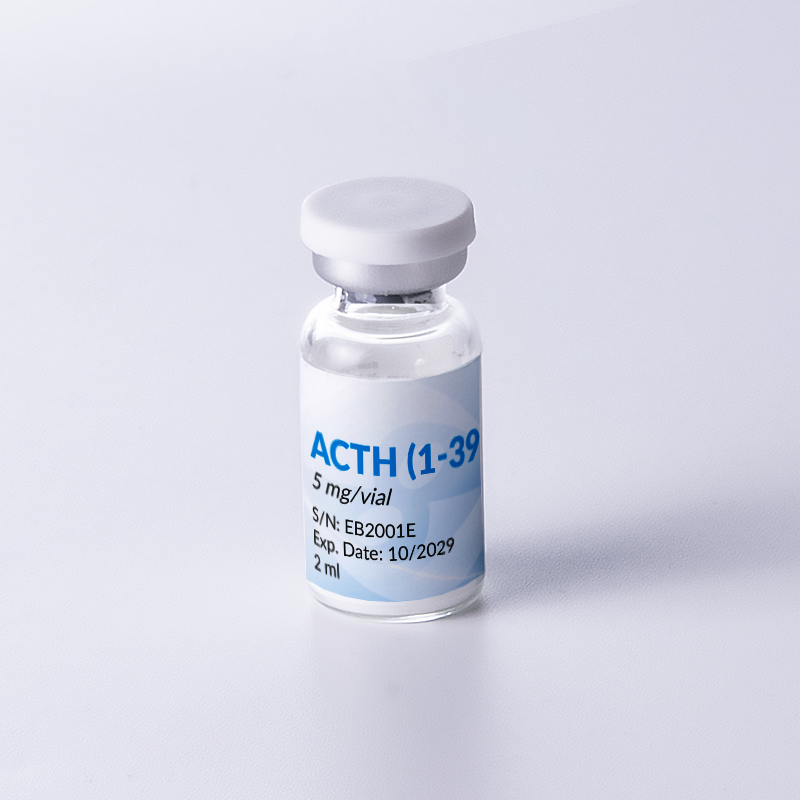
Lyophilized peptide in a sealed vial. Reconstitute with bacteriostatic water.
Quality assurance
Independently verified at two accredited third-party laboratories. Batch-specific COA included with every shipment.
Research use only. All EBIOM products are supplied strictly for laboratory and preclinical research. They are not intended for human or veterinary use, diagnosis, or treatment of any medical condition. Handling must comply with all applicable laws and institutional safety guidelines.