GHK-CU
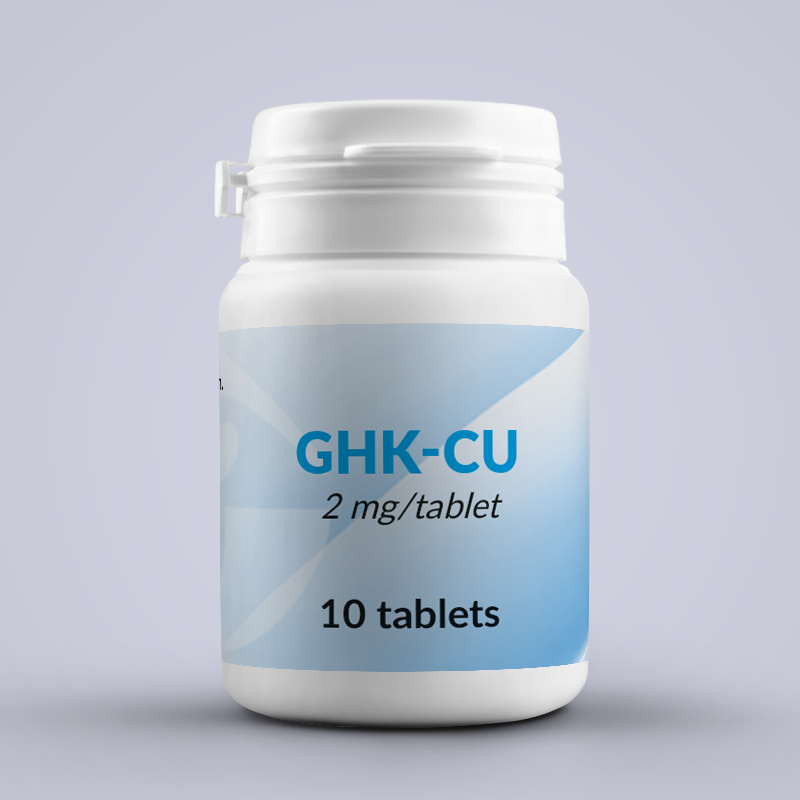
GHK-Cu (2 mg) is a copper-binding tripeptide studied for its regenerative and anti-inflammatory properties. It is commonly used in research involving wound healing, skin repair, and tissue remodeling.
- GHK-Cu, or Glycyl-L-Histidyl-L-Lysine-Copper(II), is a naturally occurring copper peptide complex known for its strong affinity to bind copper ions.
- It plays a significant role in biological repair processes and has been extensively studied for its regenerative, anti-inflammatory, and antioxidant properties.
- Research has shown that GHK-Cu can stimulate the synthesis of collagen, elastin, and glycosaminoglycans—key components in extracellular matrix remodeling.
Product overview
GHK-Cu, or Glycyl-L-Histidyl-L-Lysine-Copper(II), is a naturally occurring copper peptide complex known for its strong affinity to bind copper ions. It plays a significant role in biological repair processes and has been extensively studied for its regenerative, anti-inflammatory, and antioxidant properties.
Studied in research on receptor-specific peptide signaling and endocrine pathways.
Every batch is independently tested at two accredited third-party laboratories. Each shipment is accompanied by a batch-specific Certificate of Analysis. Material Safety Data Sheets (MSDS) and Laboratory Chemical Safety Summaries (LCSS) are available on request.
Research use
Studied in research on receptor-specific peptide signaling and endocrine pathways.
Storage
Store lyophilized at 2–8 °C; refrigerate after reconstitution.
Presentation
Lyophilized peptide in a sealed vial. Reconstitute with bacteriostatic water.
Quality assurance
Independently verified at two accredited third-party laboratories. Batch-specific COA included with every shipment.
Research use only. All EBIOM products are supplied strictly for laboratory and preclinical research. They are not intended for human or veterinary use, diagnosis, or treatment of any medical condition. Handling must comply with all applicable laws and institutional safety guidelines.